
The Victorian era is often remembered as a refined and prosperous age, but for many working-class families crowded into inner cities, life could be bleak – marked by crushing poverty, rampant crime, unhealthy living conditions, and little to no social safety net.
Charitable organizations stepped in to fill the void. Many worked to steer men away from drink and toward productive lives. In one notable chapter of Mentor’s history, it was the Salvation Army that made its mark.
In the late 1890s, the Salvation Army purchased 288 acres along Reynolds Road, south of Hodgson Road, for approximately $30,000. Their vision: to establish a farm colony that would offer struggling families a fresh start and a new lease on life.
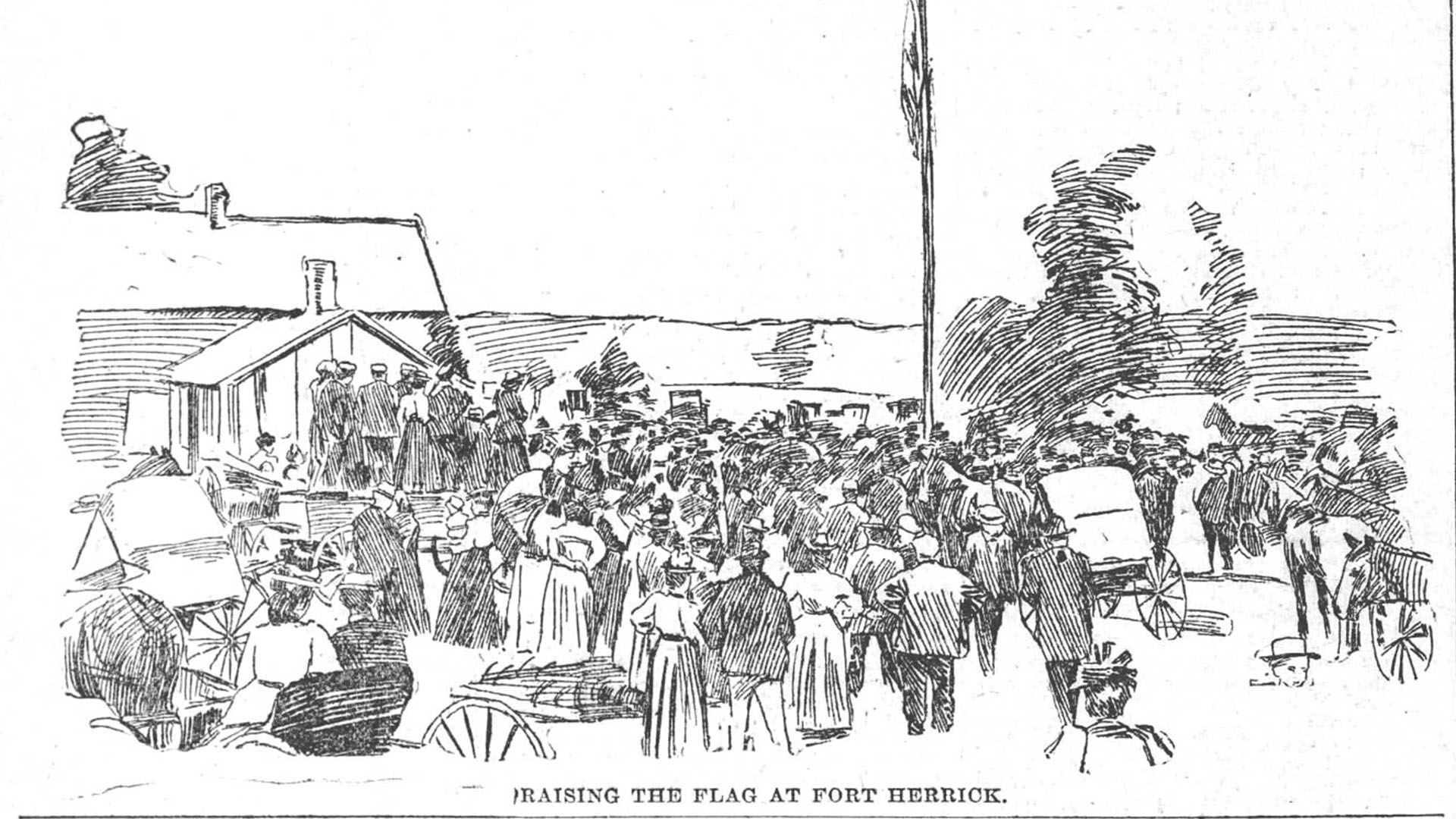
On a celebratory day in August 1898, Commander Frederick Booth-Tucker joined 2,000 enthusiastic Salvationists and supporters to formally dedicate the colony as Fort Herrick in honor of Myron T. Herrick who owned part of the land and who offered much assistance to the army.
Modeled after successful work colonies in Great Britain, Fort Herrick was the third such settlement in the United States, following Fort Amity in Colorado and Fort Romil in California.
Prospective colonists were required to purchase small parcels of land of one to ten acres through affordable installments and earn their living by farming. Each family underwent a thirty-day probationary period before final acceptance. Once approved, they received a cottage and were expected to contribute fully to the community.
In its first year, twelve families settled there, and the colony was quickly hailed a success when the initial crop was harvested and sold.
But plans evolved over the following decade. In 1908, roughly 200 acres of the property had been transformed into a fresh-air summer camp for inner-city children.
As reported in the Cleveland Plain Dealer:
“The poorest slums of the city have been visited by Salvation Army representatives in selecting these outing guests, who will be kept there for ten days and treated to good food, pure milk and fresh air. Others will then take their places, and it is planned to give joy and help to several hundred during the summer… Many of the children have been attendants at the Salvation Army Day nursery, their mothers being the poorest of day laborers, and this outing will be like a breath of heaven to them.”
And a summer camp, it remained until the 1960s. During the summer of 1961, Ft. Herrick hosted over 1,000 children over seven periods of 10 days.
The last known reference to Fort Herrick as an active camp appears in 1965, Residential development on portions of the former colony had already begun by the mid-1950s, with most homes completed in the 1960s and 1970s.
Today, the original headquarters building and chapel still stand as part of a private residence on Reynolds Road—a quiet reminder of Mentor’s bucolic past and the Salvation Army’s enduring legacy of hope.
Learn about other points of interest on the Mentor History Trail.